Begin with a habitat brief
Write a short description of the experience you want before comparing rooms. Watching wetland movement from a hide, listening in a mixed forest and scanning an exposed headland require different kinds of access. Decide whether your priority is a particular habitat, a broad range of birds or simply unhurried observation. That distinction helps you resist accommodation descriptions that promise everything while explaining little about the surrounding land.
Next, mark the legal entry points, not just the reserve boundary. Ask the accommodation for the journey to an actual visitor entrance or public trailhead. A short straight-line distance can conceal a river crossing, a private track or a road that only opens seasonally. Separate the time spent travelling from the time available to watch. Repeat that calculation for an ordinary day with rain, a slow breakfast or a tired traveller.
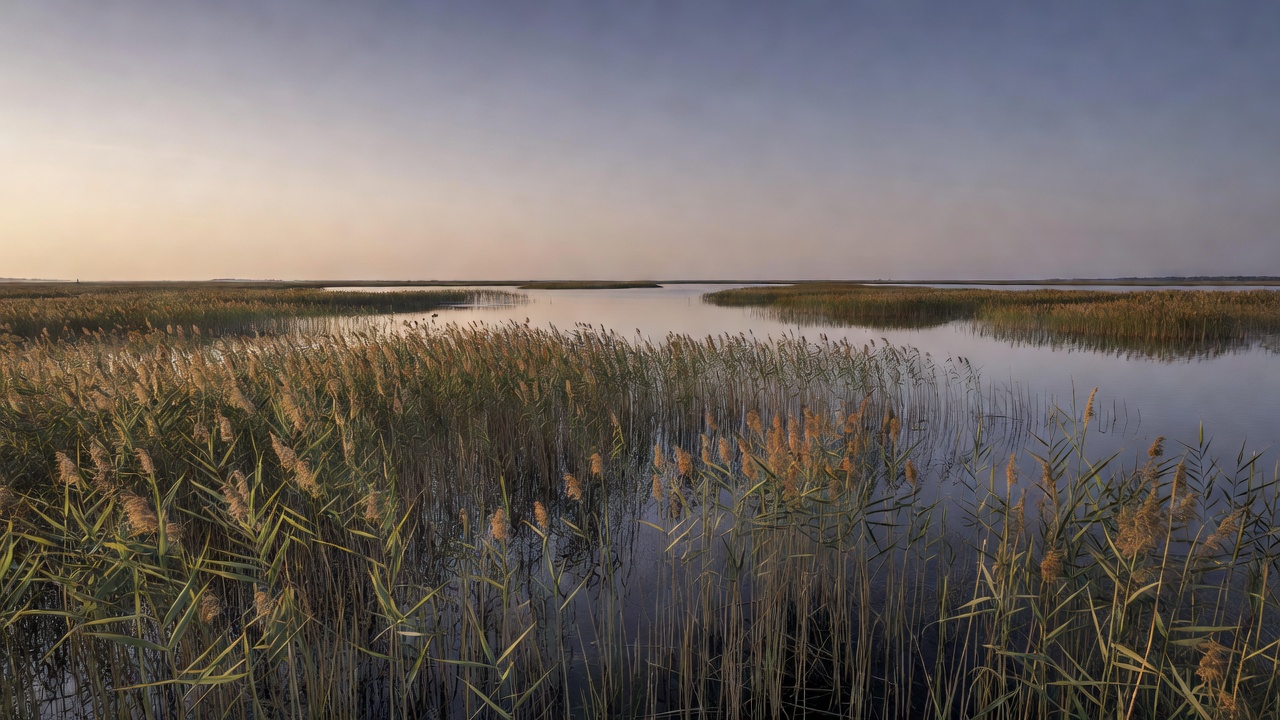
Wetlands: access follows the water
The Danube Delta, the Camargue and Doñana illustrate why a wetland base needs more than nearby water. Channels, reedbeds, saltmarshes and open lagoons support different watching conditions. Water levels and management decisions can change which paths or viewpoints are useful. In the Danube Delta, a boat may be part of the access plan; elsewhere, a vehicle and public hide network may matter more.
Ask whether the suggested route is public, guided-only or subject to restrictions. Check if a boat outing starts beside the accommodation or at a separate landing, and whether transfer time is included. At Doñana, distinguish publicly accessible visitor areas from regulated routes requiring authorised arrangements. Do not assume a lodge’s regional description gives you access to protected land. For the Camargue, confirm opening arrangements at each site you intend to visit rather than treating the whole region as one open reserve.
Forests: proximity is not the same as connectivity
Forest birding often benefits from repeated, quiet visits to a manageable area. Kuusamo and Oulanka offer northern forest context, while Białowieża raises different questions about protected zones and permitted routes. In each case, choose accommodation by the trails you can use and the conditions you can manage, not by an evocative woodland photograph.
Ask about current trail surfaces, seasonal closures and how a guide handles sensitive breeding areas. Some routes may require specific permissions or guided access; rules can differ across zones within the same named landscape. A base close to a connected network of suitable trails may be more useful than a secluded cabin surrounded by land you cannot enter. Plan for quiet listening, realistic walking distances and an alternative route when weather makes the original choice unsuitable.
Coasts and tundra: allow room for weather
Varanger, the Outer Hebrides and parts of the Wadden Sea reward a different kind of preparation. Exposed roads, tidal paths and boat-dependent excursions create constraints that a hotel’s distance claim does not capture. Check the actual crossing, the last safe return and the operator’s cancellation arrangements. Never interpret a low-tide route as permission to cross without current local advice.
A useful coastal base has more than one watching option. Look for a sheltered public viewpoint, an inland walk and a suitable indoor pause, not an itinerary that fails when a single boat stays in harbour. Ask where vehicles may park without obstructing residents or working access. On tundra margins, stay on permitted routes and accept seasonal restrictions that protect nesting habitat.
Compare routes before room categories
Make a compact base comparison with three columns: target habitat, reliable access and fallback option. A hotel only earns a place on the shortlist when all three have a plausible answer. Ask for written clarification if access depends on a private transfer, guide availability or an extra payment. Keep uncertain information marked as uncertain rather than turning it into a firm plan.
Base-selection checklist
- Named public entrance or authorised access arrangement
- Realistic door-to-trail journey in expected conditions
- Suitable terrain, facilities and rest options
- A lower-impact alternative for poor weather or closures
Use authoritative sources as a starting point
The Ramsar Sites Information Service helps explain the significance of internationally important wetlands; it is not a live visitor-access service. BirdLife International offers conservation context, while Finland’s national parks information supports route and regulation checks for Finnish destinations. Confirm current local instructions with the relevant managing authority. None of these references implies a lodge partnership or an endorsement of this website.
A quiet, reachable patch of suitable habitat is often a stronger foundation than a long list of distant highlights.